
What are natural killer cells?
Natural killer cells are part of innate immunity. They can respond quickly to stressed or infected cells and help shape wider immune responses.
A plain-language guide to the immune concepts behind TRIUMPH-NK, with a short technical note for readers who want a little more detail.
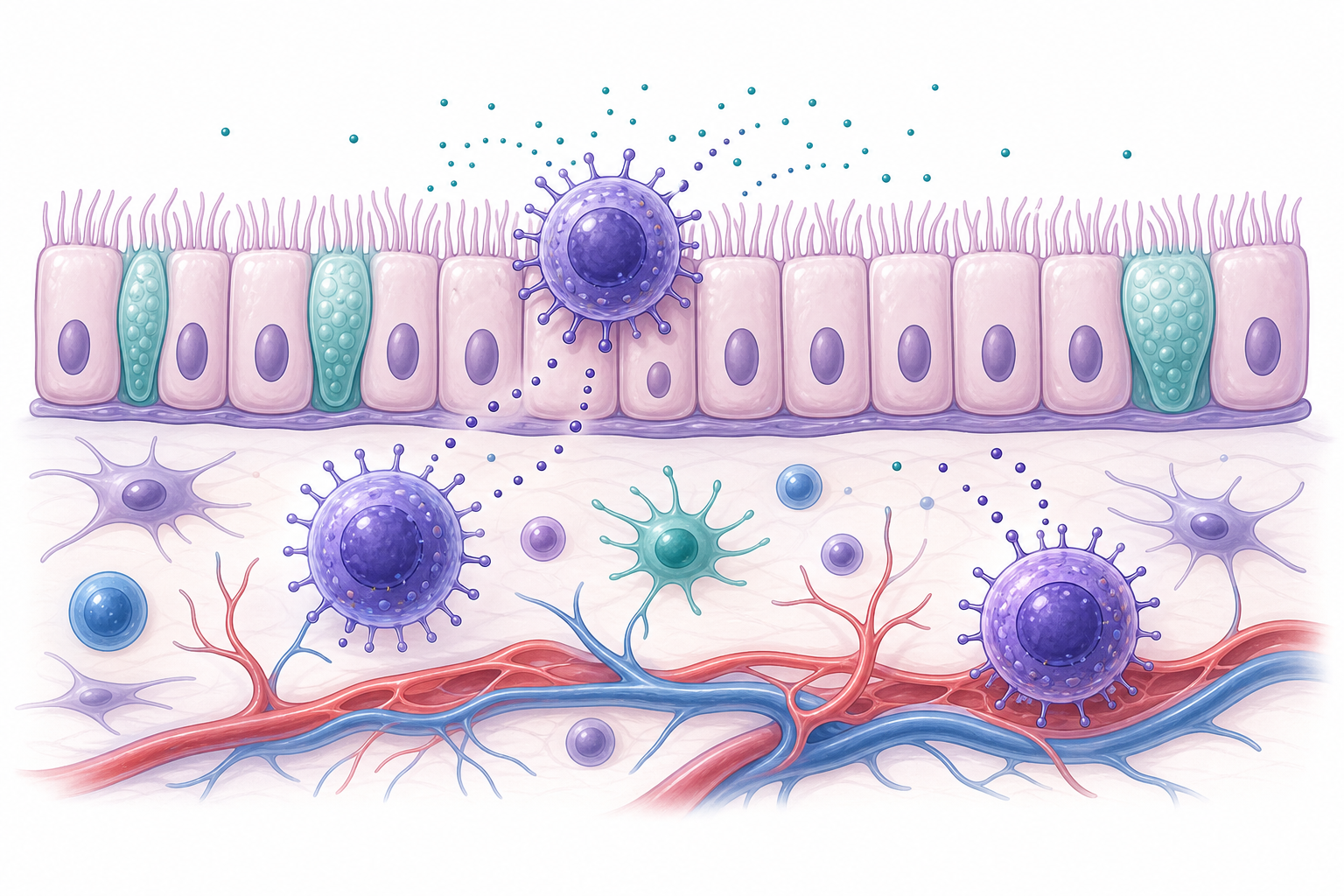
Natural killer cells are part of innate immunity. They can respond quickly to stressed or infected cells and help shape wider immune responses.
Tissue-resident immune cells are positioned in tissues rather than only circulating in blood. Location can strongly influence what an immune cell senses and how it responds.
The respiratory mucosa is a barrier and signalling environment in the airways. It is a critical place to study immune readiness because it is where many respiratory infections first interact with host tissue.
Innate immune memory describes lasting changes in the responsiveness of innate immune cells. In NK cells, memory-like behaviour can be shaped by infection history, cytokine exposure, and tissue context.
Pathogen-specific vaccination trains the immune system against a defined target. TRIUMPH-NK explores whether innate immune states can support broader respiratory readiness. It is research, not a current clinical product.
Short definitions for recurring terms.
A natural killer cell is an innate immune cell that can respond quickly to stressed or infected cells.
A tissue-resident immune cell is positioned within a tissue rather than only circulating through blood.
Immune protection at surfaces such as the airways, where the body meets the outside environment.
The fast-acting arm of the immune system that responds broadly before pathogen-specific responses mature.
A lasting change in immune responsiveness after earlier exposure or stimulation.
The cell layer lining the airways, forming a key barrier and immune signalling environment.
ARIA's Sculpting Innate Immunity opportunity space, which includes Sustained Viral Resilience.